Add Your Heading Text Here
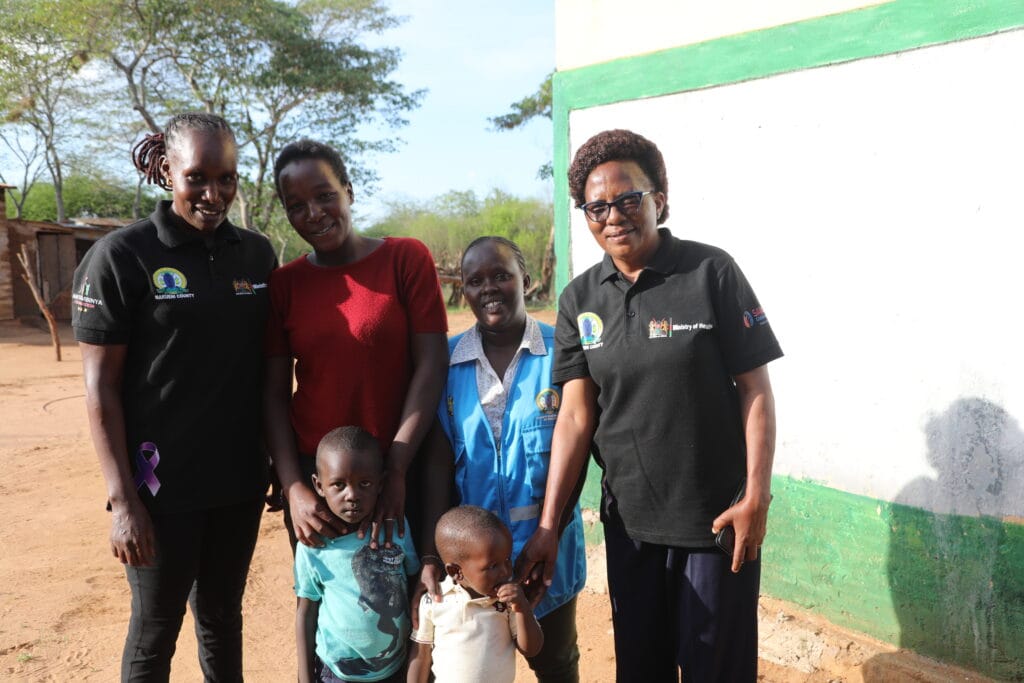
In Kosya village in Makueni County, Community Health Worker Caren Nduge begins her morning with a home she has been especially eager to visit. Caren is responsible for supporting 80 families across her village
One of the families Caren has been supporting is that of Evelyne Mueni, a 23-year-old mother of two. Evelyne’s life changed tragically when she lost her husband—the family’s sole breadwinner—in a motorcycle accident. Left to care for her children alone, Evelyne faced overwhelming challenges.
Baby Evans had been marked as malnourished. He was severely underweight and at high risk of stunting. Makueni is classified as an arid and semi arid region with a stunting rate of about 20% among children. Many families struggle with food insecurity, delayed growth in children and limited access to essential health services.
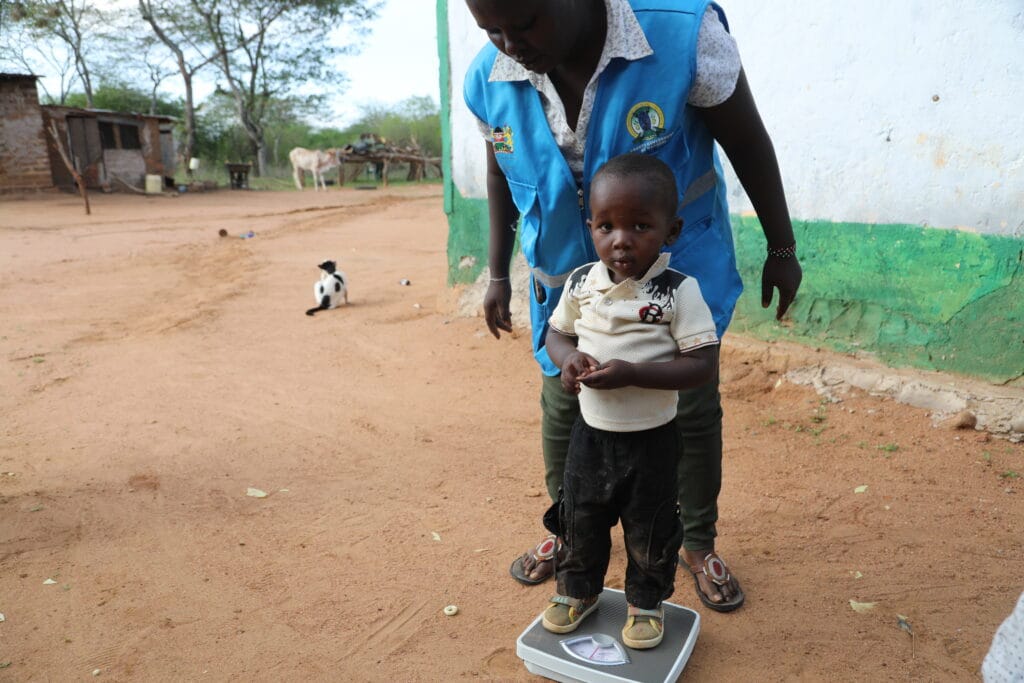
Caren steps into the homestead with a warm smile. She greets Everlyne, lifts little Evans gently onto the weighing scale and waits for the numbers to settle. When she sees the results, she breaks into a wide smile. Evans weight is at a good place.
“I am so so happy,” she says. “I have walked with Everlyne through both of her pregnancies. I have made sure she takes her supplements, goes for her clinics, delivers safely and comes for post natal care. We monitor nutrition. We make sure the children are immunized on time. Seeing Evans gain weight brings me so much joy.”
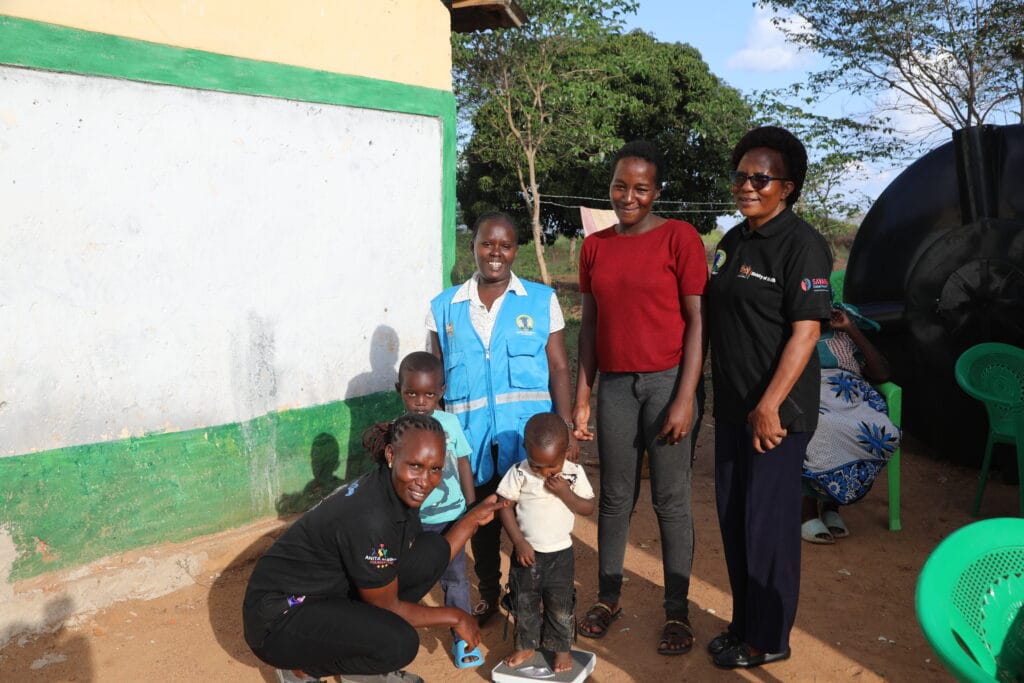
Community Health Workers in Kenya play a central role in early antenatal attendance, ensuring that mothers attend their first clinic at twelve weeks or earlier and complete at least eight visits. They watch for danger signs, monitor nutrition and support iron and folic acid supplementation. They also follow up with children who are at risk of stunting, support nutrition and iron-folic acid adherence, helping them graduate from red to yellow to healthy green weight categories on the growth chart. These efforts prevent complications and save lives.
This work is lifesaving. A child in Sub Saharan Africa is still seventeen times more likely to die before their fifth birthday than a child in Europe. Community Health Workers are often the first and only line of defence against preventable illness. They are are the bridge between these vulnerable families and the health system
The need is urgent. Across sub-Saharan Africa, a child is 17 times more likely to die before their fifth birthday than in Europe.
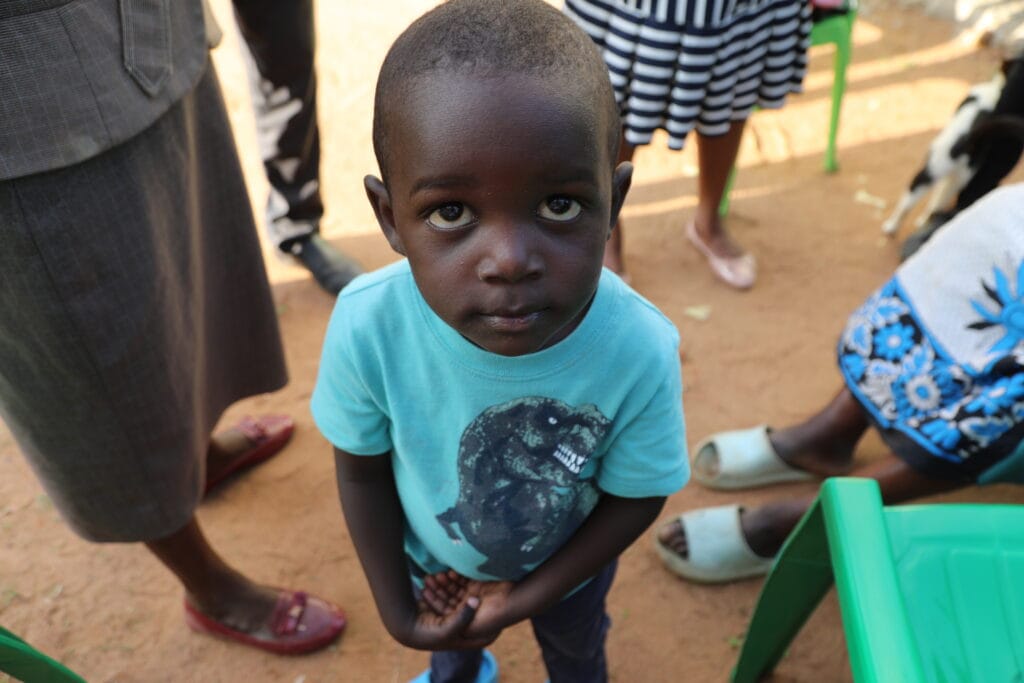
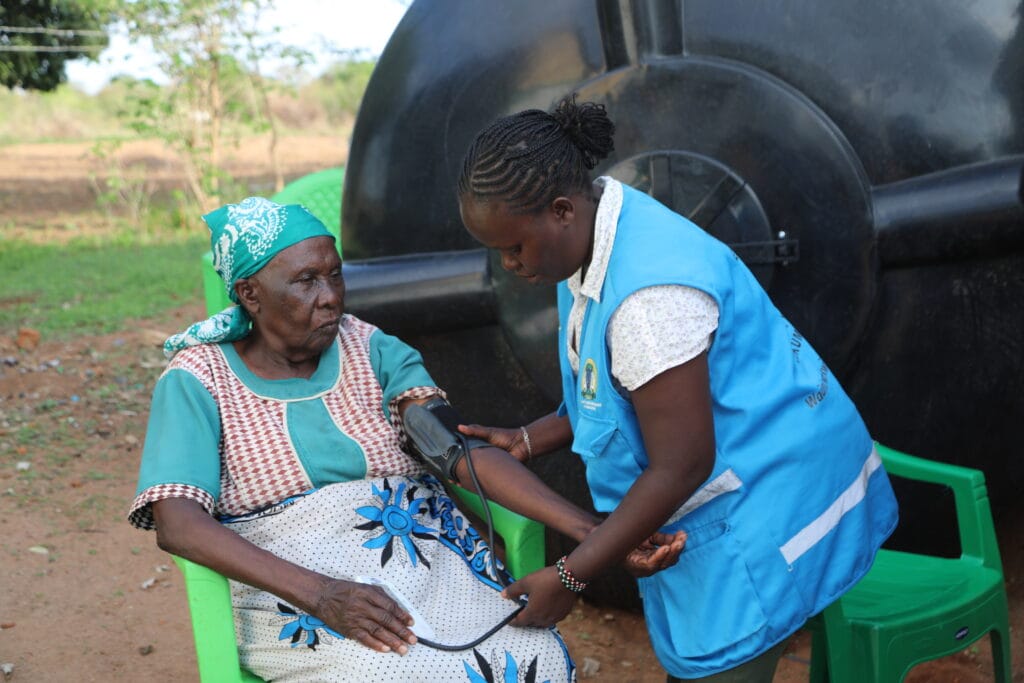
Once Caren finishes checking on Evans and Prince, she turns her attention to their grandmother, eighty year old Veronica Muthami. Veronica has been living with hypertension and has been on medication, but something feels off today. Caren checks her blood pressure twice, then a third time to be sure. The readings remain dangerously high.
She reviews Veronica’s history and realizes that the medication she has been taking may not be working as expected. There could be an underlying condition that needs attention. Caren writes a referral note and explains gently that they must go to the hospital the next day for further investigations. She reminds the family about the importance of taking medicine correctly and attending follow up visits. She promises to return within a few days to check on them again.
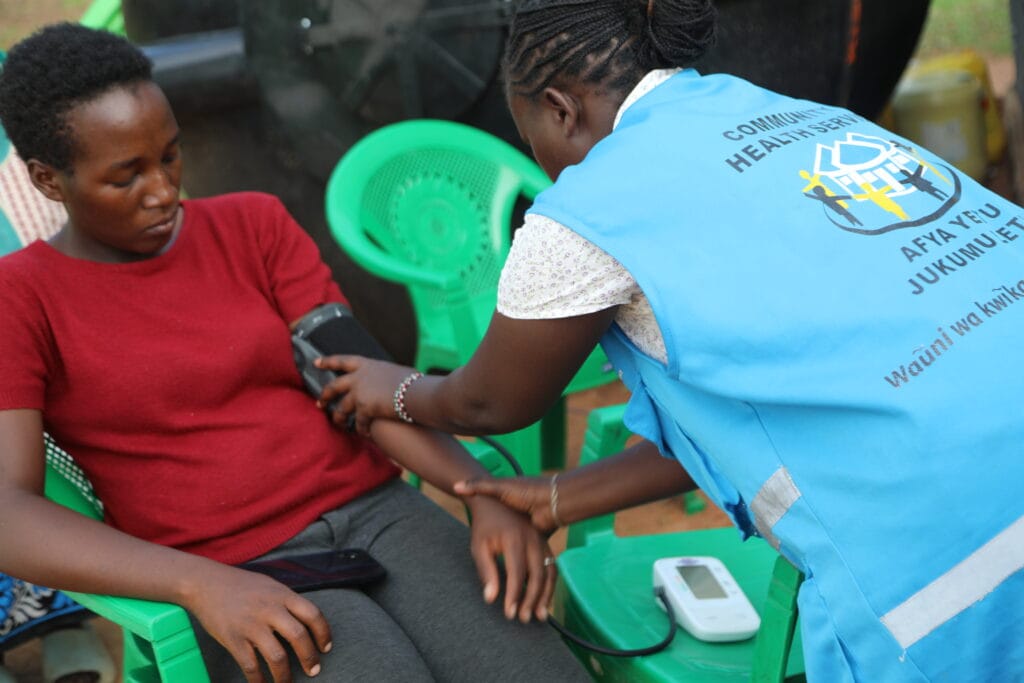
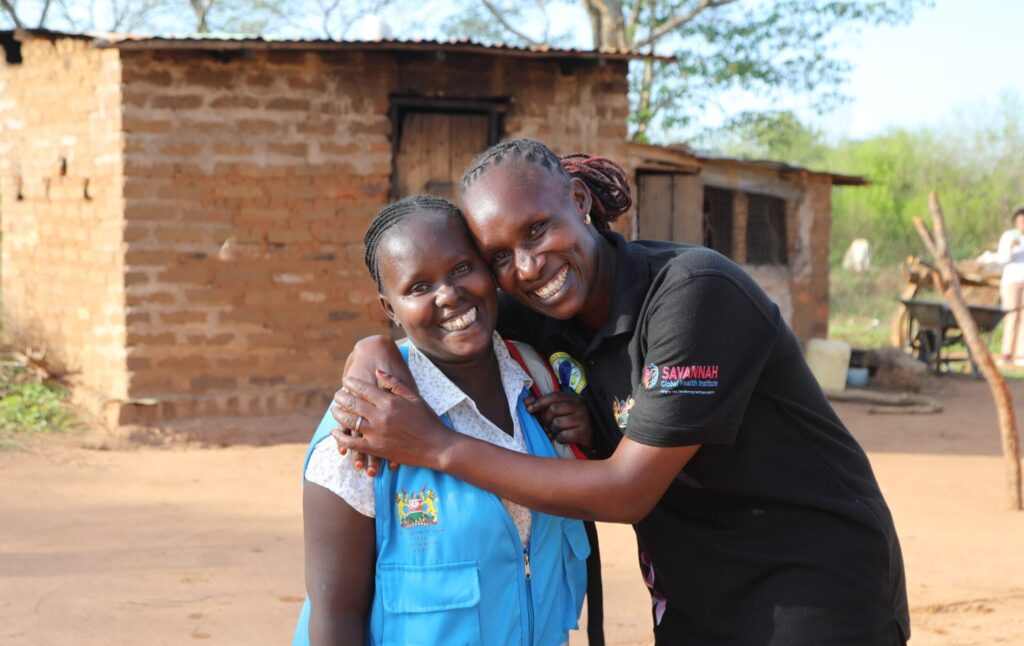
And this is just one household. Caren will see many more families today. Pregnant mothers. Elderly neighbours. Children who need supplements. Men living with chronic illness. She knows their stories. She knows their fears. She knows their names.
This is the quiet power of a Community Health Worker. They prevent emergencies before they happen. They bring healthcare to the doorstep. They protect families who might otherwise fall through the cracks.
Investing in community health is essential for strong and resilient health systems across Africa. It is one of the most effective and fair ways to ensure that the most vulnerable people do not face catastrophic health complications.
The Financing Alliance for Health is committed to strengthening this workforce. FAH works with governments to secure sustainable financing for Community Health Workers and supports programs that build their skills, livelihoods and resilience.
If you would like to support this work and help CHWs like Caren continue saving lives, you can donate to the Thrive to Serve campaign today.