by Thenjie Sisimayi
Would you visit a vulnerable household if you could save a life, but may also be putting yourself at risk of gender-based violence? Through better health financing, this is a dilemma which we want to ensure Community Health Workers no longer face.
Introduction
Every year on 25th November – 10th December, the world marks the International Day for the Elimination of Violence Against Women, a stark reminder of the urgent need to address one of the most pervasive human rights violations of our time: gender-based violence (GBV). This day also signals the start of the 16 Days of Activism, a global movement that calls us to deepen our efforts to protect women, elevate their voices, and build systems that uphold their dignity, safety, and rights.
This year’s theme “Break Barriers, Build Safe Spaces: Upholding Women and Girls’ Rights to Safety” aligns deeply with the core of our work at the Financing Alliance for Health (FAH).
GBV Is a Health System Crisis — and Community Health Workers Are Among the Most Affected
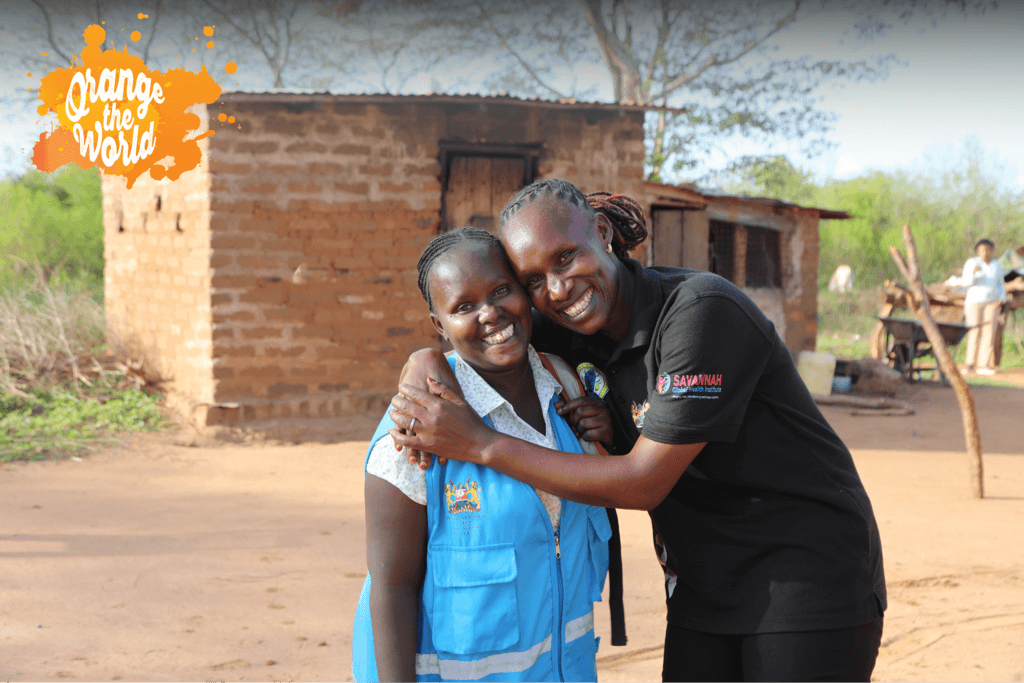
The global statistic is staggering: 1 in 3 women will experience physical or sexual violence in their lifetime. Yet behind this number are real people, real stories, and real consequences for health systems—not least for the Community Health Workers (CHWs) who serve on the frontlines. CHWs are the backbone of primary healthcare. Globally, 70% of them are women. They deliver life-saving services including:
- Immunization
- Maternal, newborn, and child health
- Sexual and reproductive health
- Health promotion
- NCD prevention and management
- Emergency and crisis response
- GBV Prevention and Response
And they do all this often while facing violence themselves – harassment, threats, assault, or unsafe travel routes that place them at risk. Many operate without formal recognition, adequate remuneration, or protective workplace policies.
In short: CHWs protect us, but they themselves are too often unprotected
Financing Is a Feminist Tool and a GBV Prevention Strateg
- Are gender-responsive
- Include safe working conditions
- Offer adequate transport and protective equipment
- Provide mechanisms for reporting violence
- Include women’s voices in design and decision-making
- Recognize, professionalize, and pay CHWs fairly
- Mobilize and unlock funding for community health
- Embed gender analysis into financing frameworks
- Strengthen policies that professionalize CHWs
- Invest in gender-responsive systems that address prevention and response to GBV
- Bring women’s and girls’ realities into the heart of program design
Why CHW Protection Must Be a Global Priority
CHWs are more than service providers—they are trusted community anchors, educators, first responders, and often the only access point to healthcare in hard-to-reach areas.
Yet we ask them to serve communities while facing:
- Violence during home visits
- Insecure transport routes
- Exposure to harmful social norms
- Stigma and discrimination – in some regions, it may be considered unfit for women to have jobs or visit other people’s homes unaccompanied by a man
- Lack of safe reporting channels
- Potential retaliation after having helped women from the communities they support report GBV
- Poorly funded systems that cannot protect them
Strengthening community health systems without addressing the safety of CHWs is an incomplete reform.
Protection is not a perk—it is a prerequisite for effective service delivery.
FAH’s Commitment: Build Safe Spaces, Invest in Gender-Responsive Health Systems
During these 16 Days of Activism, FAH reaffirms its commitment to a future where:
- CHWs work in safe, dignified, protected environments
- Health systems integrate gender equality at every level
- Governments have the resources to professionalize and fairly remunerate CHWs
- GBV prevention and response are embedded into financing structures
- Women and girls influence the design, governance, and priorities of community health programs
Ending GBV is not just a campaign. It is a daily practice, a systems responsibility, and a collective moral obligation.
A Call to Action
As we observe the 16 Days of Activism, we call on:
- Governments: To invest in community health systems that protect, professionalize, and pay CHWs.
- Partners: To prioritize gender transformation as a core component of health financing.
- Communities: To stand against harmful norms and support women and girls’ rights to safety and dignity.
- All of us: To remember that healthy communities require healthy—and safe—frontline workers.
Let us break the barriers. Let us build safe spaces. Let us commit to a future where gender-based violence has no place in our homes, communities, or health systems.