Authored by Geredine Kandie, Technical Advisor – Health Financing
Maternal mortality remains one of Kenya’s most persistent health challenges. Many maternal deaths occur at the point of delivery, but the underlying drivers begin long before a woman reaches a health facility. Delayed recognition of danger signs, late antenatal care (ANC), slow decision-making, social barriers, transport challenges, and weak referral coordination all interact to shape outcomes. System’s thinking offers a powerful lens to understand these interconnected factors. It shifts the focus from isolated interventions to the relationships, behaviors, and feedback loops that influence maternal risk across time and space.
Kenya’s Community Health Programme (CHSP) exemplifies this systems-based approach. While the policy documents may not explicitly use systems thinking language, the programme design integrates precisely the elements that make systems adaptive, responsive, and preventive. By positioning Community Health Promoters (CHPs) at the household level, digitizing community data, embedding continuous learning, and strengthening community–facility linkages, Kenya has built an upstream, interconnected platform capable of preventing maternal deaths before emergencies occur.
Community Health as a System, not a List of Activities
Maternal mortality emerges from a chain of events, not a single failure. Late ANC, inadequate birth preparedness, missed danger signs, slow referrals, cultural norms, and facility bottlenecks interact in complex ways. CHPs sit at the center of these interactions. Through routine household engagement, they influence how families think, decide, behave, and respond throughout pregnancy.
This creates a continuous system of feedback loops, households provide early signals, CHPs respond with guidance or referral, facilities act on the incoming information, and data reinforces future decisions. The strength of these loops determines whether risks are detected early or escalate silently. A community health approach rooted in systems thinking therefore focuses on strengthening the linkages between these components, not just delivering isolated messages or services.
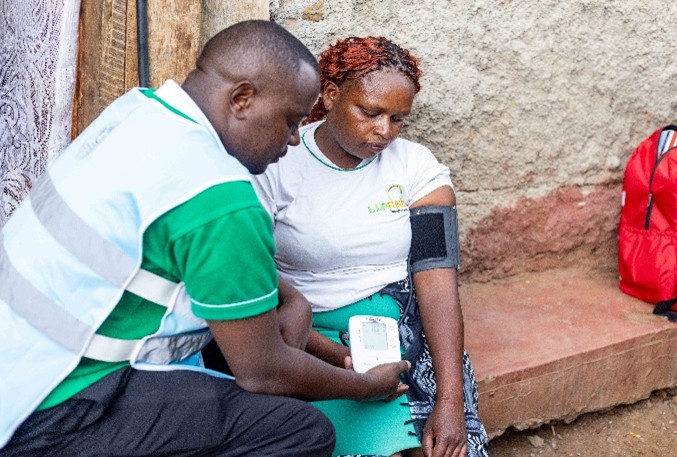
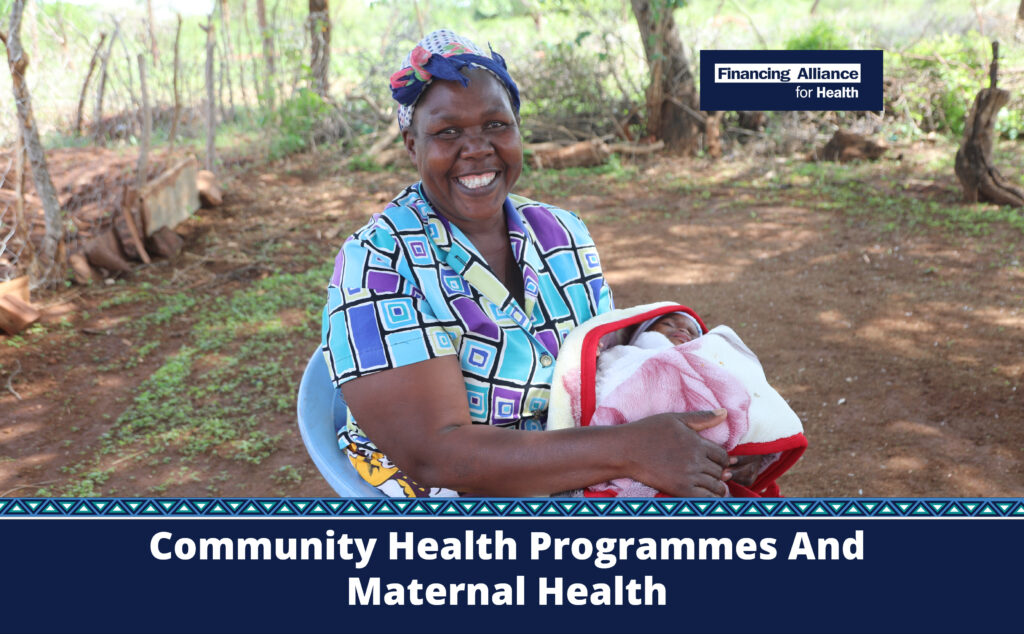
Figure 1: A CHP conducts a routine household visit- a high leverage point for strengthening maternal health outcomes
1. CHPs at Household Level: Acting at the Highest Leverage Point
Systems thinking highlights the idea of leverage points, places where small, well-designed changes can produce large, sustained impact. The household is one of the highest leverage points for maternal health, and CHPs operate exactly there.
Their routine work influences:
- Early identification of pregnancy through proactive household engagement
- Uptake of antenatal care (ANC) initiation in the first trimester
- Birth preparedness and complication readiness at household level.
- Recognition and timely interpretation of maternal and newborn danger signs
- Expedited decision-making and care-seeking during pregnancy or labour complications.
- Confidence and sustained trust in the community–facility health system interface
By shaping these behaviors upstream, before complications occur, CHPs shift system behavior in ways that reduce reliance on emergency responses. This is what makes household engagement one of the most powerful interventions in maternal health.
2. An Integrated Service Package That Functions as a System
Kenya’s community health service package is designed as an interconnected system, not a checklist. For maternal health, it integrates:
- Scheduled home visits across all trimesters.
- Household risk screening and stratification (anemia, TB, hypertension, adolescent vulnerability)
- Continuous BCC and caregiver counselling loops
- Defaulter tracing for missed ANC.
- Household financing and transport enablement linkages
- Rapid-activation referrals for high-risk pregnancy flags
- Postpartum maternal and newborn follow-through and monitoring
These components reinforce each other across the three delays that drive maternal mortality:
- Delay in deciding to seek care.
- Delay in reaching a facility.
- Delay in receiving quality care.
By spreading interventions along the full pathway, the CHSP strengthens the entire maternal health chain, not just the point of delivery.
3. eCHIS: Turning Household Data into Real-Time System Feedback
A health system functions effectively only when information flows rapidly and consistently. Kenya’s electronic Community Health Information System (eCHIS) converts community-level interactions into real-time data that improves responsiveness.
Through eCHIS:
- Pregnancies are registered early.
- High-risk mothers are identified.
- Referrals are initiated and tracked.
- Danger signs are flagged immediately.
- Facilities can anticipate incoming cases.
- Counties can detect geographic hotspots.
This transforms data into a feedback mechanism. Instead of static reports, the system actively learns from household-level inputs and adjusts its actions. This digital backbone exemplifies systems thinking: a continuous loop linking detection response learning.
4. Tackling Root Causes, Not Just Emergency Symptoms
Traditional maternal health interventions often focus heavily on emergency obstetric care. While essential, these downstream efforts address complications only after they occur. CHSP focuses upstream, on the conditions that create vulnerability.
This includes:
- Early pregnancy identification
- Household birth preparedness plans
- Targeting harmful social norms
- Improving maternal nutrition
- Engaging male partners and caregivers
- Strengthening continuity across ANC visits
A systems approach recognizes that reducing maternal mortality requires intervening at the level of drivers, not only at the point of crisis.
5. Quality Improvement as a System Learning Mechanism
Work Improvement Teams (WITs) at community and facility levels provide structured spaces for reflection and adaptive problem-solving. They examine:
- ANC attendance patterns
- Referral delays
- Cases of missed danger signs
- Gaps in transport or communication
- Follow-up challenges after discharge
By testing small, iterative changes, WITs function as learning loops. They reinforce system agility, allowing the CHSP to adapt quickly to emerging issues. This is a defining characteristic of a resilient system.
6. Strong Community–Facility Linkages for Coordinated Response
Maternal survival depends heavily on fast, coordinated action. CHSP strengthens the entire chain through:
- Clear referral and counter-referral pathways
- Active communication between CHPs and facility teams
- Advance notification for high-risk cases
- Mobilization of community support structures
- Data-linked oversight from sub-counties and counties
When these elements operate in constructive collaboration, the system reduces delays across all levels. No woman is left behind due to gaps in information, follow-up, or coordination.
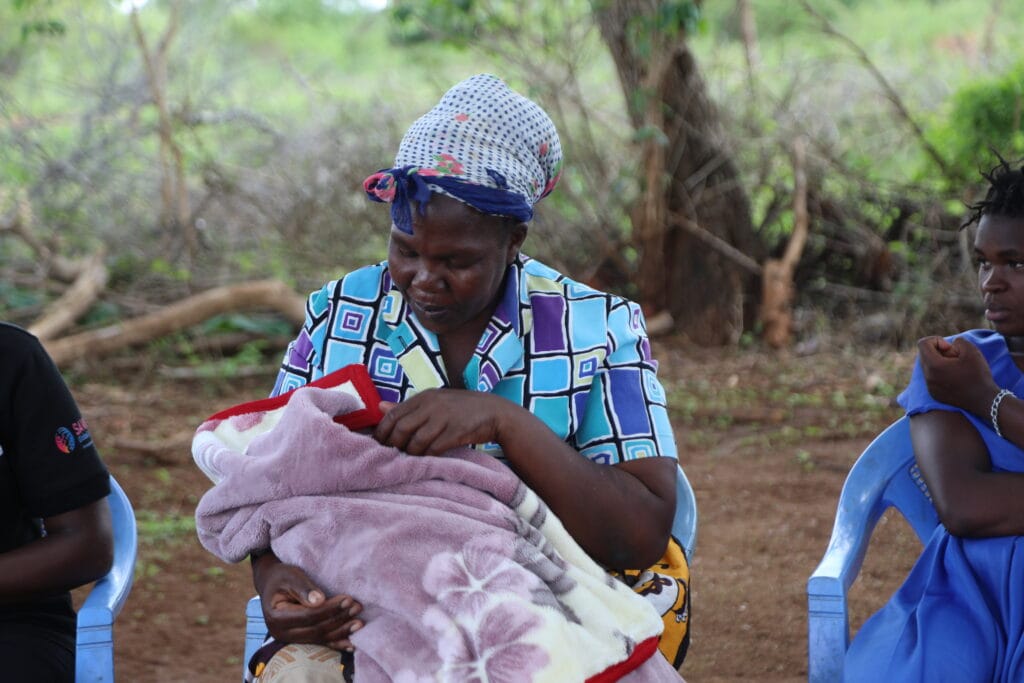
A Systems-Based Pathway to Maternal Survival
Kenya’s Community Health Programme demonstrates what it means to apply systems thinking to maternal health. By strengthening feedback loops, improving household decision-making, linking community and facility actions, digitizing information flow, and embedding continuous learning, the programme transforms community health into a living, adaptive system capable of preventing maternal deaths before emergencies arise.
This is how Kenya shifts from reacting to complications to preventing them altogether.
This is how systems thinking translates into lives saved!