Government Support
We partner long-term (3-5 years) with Ministries of Health teams to develop different and changing financing sources. This empowers them to be the lead steward in their local health systems to reach the needed scale and sustainability.
Our model of government support is rooted in 4 key steps:
Political prioritization
- Suport Primary Health teams to identify and engage budget champions across the political spectrum
- Develop and present investment cases to support continued advocacy
Operationalize primary and community health reforms
- Build capability in public financial management
- Strengthen performance management of PHC and CHW and monitor contribution to health outcomes
- Finetune policies and costing based on lessons learned
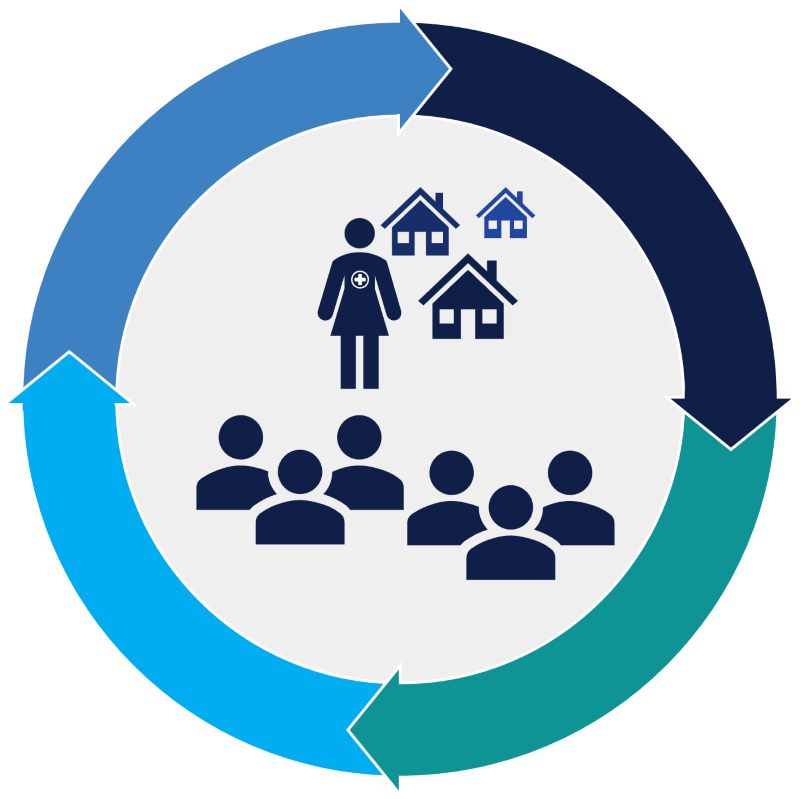
Develop strategy, policies, costing
- Develop country strategy
- Build supportive policies
- Run iterative costing process
Map and mobilize resources
- Identify & prioritize existing funding sources
- Analyze financial gap
- Develop financing pathways
The countries we support
FAH has supported 22 governments across 16 countries since inception
We are currently active in 7 countries.
FAH has has worked alongside Kenyan national Ministry of Health county governments of Laikipia, Tharaka Nithi, Makueni, Nyeri, Nakuru and Nairobi since 2017 in laying the groundwork for robust resource mobilization efforts to bolster their community health programs. Thus far:
- FAH has supported the national government in resource mobilization through Global Fund and/or Global Financing Facility application.
- FAH has supported community health strategy co-development, with Ministries of Health at both national and county governments of Laikipia, Tharaka Nithi, Makueni, Nyeri, Nairobi and Nakuru.
- Through FAH support, Tharaka Nithi, Laikipia and Makueni governments in Kenya collectively secured ~KES 230M (US$ 2.3M) to finance community health in their counties respectively.
- FAH has trained ~80 diverse stakeholders on public financial management
Download Kenya Resources
- Nairobi County Community Health Services Implementation Plan 2023 -2027
- Nairobi County Community Health Services Investment Case 2023
- Makueni County Community Health Services Policy 2020-2030
- Makueni County Community Health Services Strategy 2021-2025
- Tharaka Nithi County Community Health Strategy 2021-2025
- Tharaka Nithi County Investment Case
- Nakuru County Community Health Strategy 2023-2028
- Laikipia County Community Health Strategy 2021-2025
Zambia is a developing country in Southern Africa that has made some significant advancements in the economy, technology, and healthcare sectors over the past decade. However, the country is suffering from a huge disease burden. One in sixteen children in the country dies before the age of five. Most of them die from preventable diseases like malaria, diarrhea, pneumonia, and malnutrition. Moreover, the country faces an ever-lasting shortage of healthcare workers, primarily in rural areas.
Community health systems are changing this by extending the reach of health services to the last mile, but they remain underfunded. To help bridge the access gap through community health systems, FAH:
- Supported community health strategy co-development, with Ministries of Health
- Supported resource mobilization through Global Fund and/or Global Financing Facility application preparations
- Costing, financial gap analysis, resource mapping & ROI of the operational plan (OP) of the new CH strategy
In collaboration with the Ministry of Health in Zambia, the Financing Alliance for Health (FAH) has made significant strides in its mission to operationalize, design, and advance Sexual, Reproductive, Maternal, Neonatal, Child, and Adolescent Health (SRMNCAH) outcomes, with a strong focus on steering the country towards Universal Health Coverage (UHC). Recognizing the pivotal role of Primary Health Care (PHC) programming and strategic health financing, we aim to strengthen healthcare delivery across Zambia by integrating and enhancing SRMNCAH services within primary and community health care systems. Our goal is to elevate the standards of reproductive and child health outcomes nationwide, ultimately striving for equity and accessibility in healthcare provision. By reinforcing financing and policy frameworks for sustainable and effective SRMNCAH services, we aim to dismantle barriers to access and improve the quality of care throughout the country.
Download the Zambia resources:
- Standard Operating Procedures for Community Health Workers (CHW SOPs)
- Zambia Community Health advocacy and Resource Mobilization strategy 2024-2026
- Link climate and Health docuseries on youtube
The Government of Senegal, through the Ministry of Health and Social Action (MSAS), has prioritized Primary Health Care (PHC) and Sexual, Reproductive, Maternal, Newborn, Child, and Adolescent Health (SRMNCAH) to achieve Universal Health Coverage (UHC) as outlined in the Plan National de Développement Sanitaire et Social (PNDSS 2019-2028) vision. The Senegal MSAS has partnered with the Financing Alliance for Health (FAH) to implement these priorities. FAH provides technical and financial support to the design and implementation of the ongoing reforms in PHC and SRMNCAH, focusing on governance, health financing system review towards improving service delivery, strengthening PHC and Community health programming and gender integration.
These efforts aim to optimize resource allocation, improve community health services, and increase access to SRMNCAH services at PHC level without financial hardship. FAH is committed to fostering collaboration and supporting Senegal’s efforts to strengthen its health system and drive sustainable improvements in health service delivery.
FAH’s efforts aim to optimize resource allocation and increase access to health services without financial hardship.
The Ebola Outbreak in West Africa wrecked immeasurable havoc but it also created an opportunity for Sierra Leone to restructure and relaunch their national community health worker (CHW) program after years of segmented community-based programs. In recognition of the role community health workers played responding to the Ebola outbreak, the Ministry of Health and Sanitation embarked on a redesign and revitalization of the country’s CHW in 2016.
To help the government realize the ambition of building an at-scale and resilient community health system, the Financing Alliance for Health:
- Supported community-health strategy co-development and costing
- Supported resource mobilization through Global Fund and Global Financing Facility application
- In collaboration with partners, supported strengthening stakeholder engagement within the Ministry of Health (MoH) and built the capacity of government officials on public financial management (PFM)
In addition, we are providing technical assistance to the Sierra Leone Ministry of Health in the areas of Primary Health Care programming and innovative financing to advance Sexual, Reproductive, Maternal, Neonatal, Child, and Adolescent Health (SRMNCAH) towards achieving Universal Health Coverage. We have embedded team members within the Directorate of Planning, Policy, and Information at the Ministry of Health. Our team is offering technical support to operationalize and sustainably finance family planning and safe abortion services, integrating these into primary and community health systems to improve maternal and neonatal health outcomes, thereby moving the country closer to Universal Health Coverage.
Has made significant strides in improving public health, but challenges remain, particularly in the shortage of health professionals, limited access to heath facilities in rural areas, and health funding. Communicable diseases like malaria, respiratory infections, and diarrheal diseases continue to pose serious health risks, especially for children and vulnerable populations. Maternal and child mortality rates also remain high.
In response, CAR with the support from Financing Alliance for Health (FAH), has initiated evidence-based reforms focused on strengthening primary health care (PHC) system to enhance access to quality Sexual, Reproductive, Maternal, Neonatal, Child, and Adolescent Health (SRMNCAH) services and move towards Universal Health Coverage. FAH is providing technical assistance to support the implementation of the ongoing reforms, including capacity building, improving strategic planning at all levels and health financing system governance. .
FAH remains dedicated to collaborating with CAR’s MOHP to make a lasting impact on public health, driving sustainable improvements in the health system, and improving healthcare outcomes for all.
In collaboration with Last Mile Health (LMH), FAH is providing comprehensive support to enhance the capacity and effectiveness of health systems in our partner countries. Our key areas of focus include:
Technical Assistance to the Ministry of Health: FAH and LMH provided strategic technical assistance to the Ministry of Health during the planning and implementation phases of the Global Fund Catalytic Fund. This support is crucial for maximizing the impact of the Fund’s resources, ensuring that they are directed towards high-priority areas that will yield the most significant health outcomes.
Development and Scale of Digital Blended Learning for Health Extension Workers (HEWs): FAH and LMH are spearheading the development and scaling of a digital blended learning platform designed to train Health Extension Workers (HEWs). This innovative approach combines online and in-person training methods, enabling HEWs to acquire essential skills more efficiently and effectively, ultimately improving healthcare delivery at the community level.
Strengthening Capacity for Access to the Africa Frontline First Catalytic Fund (AFF-CF): Building on the foundation laid by the BIRCH initiative, FAH and LMH are preparing countries to access and utilize the Africa Frontline First Catalytic Fund (AFF-CF). This preparation includes capacity building, strategic planning, and resource mobilization, ensuring that countries are well-equipped to leverage the AFF-CF.
Gender Integration in Health Programming: FAH and LMH are committed to integrating gender considerations into all aspects of our health programming. This includes designing and implementing interventions that address the unique health needs and ensuring that gender-sensitive approaches are embedded in health policies design and practices.
Through these targeted initiatives, our aim is to empower health systems, enhance the skills of frontline health workers, and ensure that health services are accessible and equitable for all, particularly in underserved communities. Our partnership with LMH is driven by a shared vision of achieving lasting improvements in global health outcomes.
In collaboration with MUSO, FAH is actively engaged in a range of initiatives aimed at strengthening community health system and improving health service delivery. Our partnership focuses on the following key areas:
Training of New Community Health Workers (CHWs) on Integrated Community Case Management (iCCM): FAH and MUSO are supporting the comprehensive training of new Community Health Workers (CHWs) in iCCM, a critical approach that empowers CHWs to diagnose and treat common childhood illnesses such as malaria, pneumonia, and diarrhea at the community level. This training is essential for enhancing the capacity of CHWs to scale up life-saving interventions and reduce child mortality rates in underserved and hard-to-reach areas.
Collaboration with the Ministry of Health to Finalize the Primary and Community Health Investment Case: In partnership with the Ministry of Health, FAH and MUSO are working to finalize the investment case for primary and community health. This document is vital for securing the necessary resources and mobilize political will to strengthen the primary health care system and expand access to health services at community level. Our efforts aim to ensure that the investment case is robust, evidence-based, and aligned with national health priorities.
Strengthening Capacity for Access to the Africa Frontline First Catalytic Fund (AFF-CF):
Building on the progress made through the BIRCH initiative, countries have been supported to effectively access and utilize the Africa Frontline First Catalytic Fund (AFF-CF). This involves capacity building, strategic planning, and resource mobilization, enabling countries to leverage the AFF-CF to scale up and sustain frontline health services, particularly in resource-constrained settings.
Gender Integration in Health Programming: FAH and MUSO are deeply committed to integrating gender considerations into all aspects of our health programming and embedding gender-sensitive approaches into policy design and program implementation.
Through these collaborative efforts with MUSO, our primary goal is to enhance community health system, enhancing the skills and effectiveness of frontline health workers, and promoting equitable access to quality healthcare for all.
Completed support
We have also previously worked in 9 other countries below:
After enduring over a decade of civil war and the 2014-2015 Ebola epidemic, Liberia prioritized rebuilding its devastated health system. The need was overwhelming: over 1.2 million people lived more than an hour’s walk from the nearest health facility, and the country suffered from some of the highest maternal and under-five mortality rates in the world. Liberia’s Ebola epidemic highlighted the need to build a stronger, more resilient health system that would leave no one behind.
To accelerate this, FAH, in partnership with Last Mile Health:
- Supported community health strategy co-development, and co-development of an investment case with the Ministry of Health
- Supported resource mobilization through Global Fund and/or Global Financing Facility application preparations
While Malawi has made significant gains in health outcomes, health inequalities are still huge in Malawi, where the richest are able to access high-quality private clinics that are out of reach for the poor. Additionally, the country’s faces a severe health workforce shortage, which has limited the country’s ability to deliver care to its growing rural population.
FAH supported the government to address these challenges by:
- Supporting resource mobilization through exploration of PPP structures for funding the community health posts, through our co-developed PPP playbook
- Supporting domestic resource mobilization for the new National Community Health Strategy
Rwanda, a small landlocked country in East Africa, has made remarkable socioeconomic progress in the past decade with real GDP growth averaging 8.2% annually. This has translated into improvements in the health situation with major reforms such as health insurance improvement, meant to guarantee access for all to health care. Despite these achievements, several health challenges remain, notable among them being financial unsustainability of health facilities and services.
To ensure that the Rwandan government delivers health services at-scale and sustainably, FAH:
- Supported government health financing policies to advance increased access and utilization of primary health services, including a community health financing policy brief.
- Supported the CHW reform programme to improve the human capital, performance management and financial sustainability
Uganda has made significant progress reducing maternal mortality and under-five mortality. However, challenges remain tied to the availability, accessibility, and affordability of essential health services. This contributes to 75% of Uganda’s preventable disease burden. With a population of approximately 43 million people, Uganda faces a significant health worker shortage to address these challenges. Given the disease burden of Uganda’s population and sub-optimal performance of the Village Health Teams (VHTs), the Ministry of Health in Uganda developed the Community Health Extension Workers (CHEW) Strategy in 2017, though financing was a major challenge to the roll-out of the CHEW strategy.
FAH worked with the Ugandan Ministry of Health to further refine the resource needs and gaps, build capacity on costing, gap analyses and investment plans, and crowd in funding for the CHEW program. By:
- Supporting resource mobilization through budget domestic resource mobilization
- Domestic resource mapping and mobilization for the CHEW programme
- Developing a CHEW investment plan and advocacy pack
- Exploration of an innovative financing instrument
South Africa’s health transition is characterized by a quadruple burden of communicable, non-communicable, perinatal and maternal, and injury-related disorders. The country faces relentless have supported burden of infectious and non-communicable diseases that the health system fails to combat due to fragmentation of the healthcare system. The high burden of the HIV and AIDS epidemic coincide with high burden of tuberculosis, high maternal and child mortality, high levels of violence and injuries, and a growing burden of non-communicable diseases. In response to the national health crisis, the South African Government introduced the re-engineering of primary healthcare (PHC) strategy and adopted the three-stream approach to PHC re-engineering, with one of the three streams being a ward-based PHC outreach team for each electoral ward (WBOT).
To complement the government’s efforts in reducing the quadruple disease burden, FAH:
- Provided continued thought leadership on the Ward Based Outreach Teams (WBOT), including interpretation of the investment case and disbursement mechanisms to provinces
In recent years, Zimbabwe has faced an unprecedented health and human resource crisis. Health workers were leaving their roles due to the country’s instability and cholera ravaged the country: a cholera outbreak that eventually claimed almost 4,500 lives was ravaging the country, while the number of health workers available for duty had shrunk to less than 20% of the initial number.
Zimbabwe’s economic challenges peaked in 2008, with inflation reaching 231 million percent. This caused an unprecedented deterioration of health infrastructure, loss of experienced health professionals, drug shortages and a steep decline in the availability of health services for the population.
FAH supported Zimbabwe in its efforts to address the HRH crisis to ensure health access for all by:
- Supporting community-health strategy co-development and comprehensive community health package (CCHP), with the Ministry of Health as well costing, financial gap analysis, resource mapping & ROI of the operational plan (OP) of the new CH strategy.
- Supporting resource mobilization through Global Fund and/or Global Financing Facility application preparations
Too many women and children die early in neglected communities. In Togo, 1 in 10 children die before his or her fifth birthday, and 368 women die per 100,000 live births. The majority of these deaths are completely avoidable but Togo lacks the functioning healthcare system required to deliver effective care to its citizens. Geographic barriers, high costs, poor quality of care, and a lack of supplies and equipment contribute to low healthcare utilization and high mortality rates. It is against this backdrop that Togo set a goal to reduce child mortality by 33% by 2022.
To help expedite this, FAH, in partnership with other organizations
- Worked with the Togolese government to launch the user fee elimination program for maternal healthcare services, ‘Wezou’ in August 2021. The Wezou initiative aims to increase access to healthcare for women by eliminating the cost of care, a key barrier
- Worked with the Togolese government to evaluate existing community health models in the country, with a view to selecting the most optimal model. In order to help the Government of Togo in its analysis, the FAH conducted on-ground evaluations of existing models, benchmarked against global case studies covering five countries and developed a foundational costing analysis of the Community Health Strategy, 2022-2025. As community health systems have been shown to extend the reach of the health system to the last mile.
Despite increased government funding and the expansion of its range of health interventions, Burkina Faso continues to face important challenges in the health sector. Communicable diseases remain the primary cause of morbidity and mortality in the country -malaria is the largest cause of mortality for children under the age of five.
To help turn around the mortality and morbidity number, FAH:
- Conducted a situational analysis and feasibility assessment in the country with an aim to potentially engage the Ministry of Health in strengthening the healthcare system to put an end to preventable loss of life.
For Haiti’s health sector, 2010 was a year of unprecedented challenges. The January 12 earthquake claimed the lives of more than 200,000 Haitians, including some 300-health workers, and injured many thousands more, while causing serious damage and disruption to health infrastructure, services and supply lines. The cholera epidemic added new difficulties just as the health sector was beginning to recover and rebuild.
To support the country to accelerate progress toward recovery:
- FAH conducted a situational analysis and feasibility assessment in the country for potential future engagement.