
CHWs are instrumental in achieving UHC. They are the critical link between our health systems and hard-to-reach communities. They are trusted members of the communities as they understand local social and cultural norms, and hence, it becomes easier for them to address local issues and bring about change. Our landmark report showed that investing in CHWs gives 10X economic returns.
One of the service packages that CHWs deliver—that can lead to GBV—is family planning. Unfortunately, GBV is often triggered because of socio-cultural norms in patriarchal societies where it is upon the man to decide whether they utilize family planning. In addressing GBV, CHWs become extremely important as they not only identify this issue within their communities but also support and refer GBV survivors to health facilities and connect them to the justice system.
We must not forget, however, that over 70% of CHWs are female volunteers and knowing that one-third of African women are exposed to GBV – many CHWs are vulnerable themselves. This is made more challenging by the fact that voluntary work tends to attract more women because of cultural and social expectations, and they are left unpaid, unsupported, and vulnerable. This emphasizes the urgent need to invest in CHWs for better job security, equity, and dignity, which in turn will lift communities, improve health outcomes, contribute to economic growth, and help address GBV.

Dorothy Mwengei
Health Financing Technical Advisor, Financing Alliance for Health
When programs leverage the CHWs, it is critical that their design prioritizes the needs of those in the role. This includes ensuring their safety during deployment, fair compensation, and access to redressal mechanisms for harassment or poor labor conditions. It’s also essential to create pathways for career progression so that CHWs can advance within the health system.
Providing CHWs with training goes beyond health-related skills. Programs need to equip them with digital literacy, financial literacy, and other life skills that they might not have had access to previously. These skills will not only empower them in their professional roles but also transform their personal lives and financial independence.
In terms of broader strategies, we’re seeing encouraging trends. Increasingly, funders are adopting frameworks that align health outcomes with gender equity goals. For instance, ensuring CHWs are empowered with training and support improves their lives and accelerates health outcomes such as malaria reduction, vaccination uptake, and maternal health improvements.
The Gates Foundation has invested heavily in community health programs, most often with disease-specific programmatic goals at the center of the grants. The Gender Integration team at the foundation is working to align these investments more systematically to ensure that gender considerations are embedded throughout the program lifecycle. Our goal is to ensure that every program investing in CHWs is also working to not only mitigate exploitation and reduce risks but also seek to create a positive, empowered environment around CHWs that ultimately will make

Graham Snead
Program Officer for Gender Integration, Bill & Melinda Gates Foundation
In Makueni County, we are acutely aware of the critical role that CHPs/CHWs play in our health systems. Recognizing their contributions and the challenges they face, we have developed policies to protect and empower them. These include a Sexual and Gender-Based Violence Policy, a Gender Policy, and a Social Protection Policy. We know that policies without legal frameworks can be difficult to enforce, so we are developing a Social Protection Bill to provide more robust legal backing to these efforts.
Currently, our CHPs receive a stipend of Kes 2,500 per month. While this stipend is a step forward, it cannot cover basic needs such as rent or transportation. This limits their ability to invest in small projects or even meet basic needs at home. To bridge this gap, we are implementing socio-economic empowerment programs. We are forming groups to help CHPs save and invest in small businesses. By building their financial capacity, we aim to help them become more resilient and less dependent on the stipends they receive. These savings groups have the potential to empower CHPs economically and give them the tools to address vulnerabilities like gender-based violence. We have introduced the Makueni Empowerment Fund, which provides loans at just 2% interest, enabling CHPs to start small businesses and invest in their futures
In the past, CHPs worked purely on a voluntary basis, which left them highly vulnerable. Now, through our community health strategy, we introduce measures to ensure they are formally recognized. This includes linking them to the county health systems and providing them with access to training and social protection programs.
We are not stopping at just policies. In Makueni, we have a County Integrated Development Plan (CIDP) that guides all programs for the next five years. This plan ensures that CHPs are included in initiatives that address economic empowerment and healthcare delivery. Additionally, our Community Health Strategy 2021-2025 includes sensitization programs to nurture a culture of saving among CHPs, helping them transition from vulnerability to stability.
However, we still face significant financial constraints, especially with growing government budget cuts. We believe that we can strengthen our communities and health systems by building CHPs’ capacities and supporting them socially and economically. CHPs are the link between the government and the people, and their work must be valued and protected.
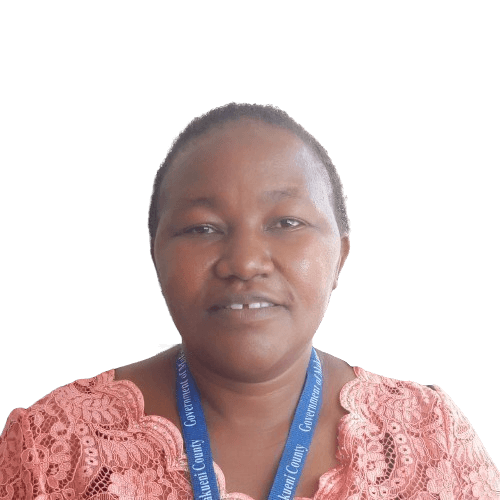
Ruciah Ngila
Deputy Director of Gender and Social Services, Makueni County, Kenya
First, it's imperative to formalize CHWs within healthcare systems and move away from reliance on volunteerism. Ensuring CHWs are recognized and compensated fairly is crucial for sustainability and empowerment. For example, in Kenya's Makueni County, what began as voluntary involvement has evolved into formal employment where CHPs receive stipends and are part of social protection programs.
Second, expanding CHWs' capabilities through targeted training programs is essential. These programs should cover more than just health-related skills, extending to digital literacy, financial management, and life skills. This comprehensive approach not only enhances their professional efficacy but also improves their personal and financial resilience. In Makueni County, initiatives such as savings groups have been introduced to foster financial independence among CHPs.
Third, integrating CHWs effectively requires collaboration across various sectors. Issues such as gender equity and health are interconnected with education, agriculture, and climate policies. Governments must therefore ensure resources and efforts are coordinated across all relevant sectors to support CHWs fully. Kenya’s development of 'One Health Strategies' is a positive step towards this integrated approach.
Finally, adopting innovative financial strategies can significantly enhance CHWs' economic stability. For example, upcoming initiatives like CHUSLA (Community Health Unit Savings and Loan Association) and recently introduced Makueni Empowerment Fund that provides loans at just 2% interest, enabling CHPs to start small businesses and invest in their futures. These initiatives help them transition from economic vulnerability to stability, allowing them to focus more effectively on their responsibilities.
Ruciah Ngila
Deputy Director of Gender and Social Services, Makueni County, Kenya